translate

Monday, September 5, 2011

Wildfires in Texas destroy hundreds of homes


6 September 2011 Last updated at 00:58 GMT Help

Firefighters in the US state of Texas are struggling to contain a huge wildfire that has already destroyed nearly 500 homes.

Forestry officials say the fire is moving so quickly that it can't be tackled from the ground and aircraft are being scrambled to drop water onto it.

Texas Governor Rick Perry has urged people to heed evacuation orders and not to stay in their homes if they had lost power.

Haiti anger over alleged Uruguay UN rape


Haitian President Michel Martelly has condemned the alleged abuse of an 18-year-old man by Uruguayan peacekeepers, and demanded a full investigation.

Mr Martelly said the Haitian man had been subjected to a "collective rape".

Five Uruguayan marines were detained after a video clip of the alleged abuse appeared on the internet, and their commanding officer was sacked.

The Uruguayan government has said it will open a criminal case against the marines in a Uruguayan court.

The UN mission in Haiti (Minustah) and the Haitian authorities are also investigating.
Revulsion

The case has provoked widespread public anger in Haiti, and there have been protests outside the UN base.

"The presidency vigorously condemns this act, which revolts the conscience of the nation, and awaits a detailed report establishing the facts," Mr Martelly's office said in a statement.

The alleged victim and his mother have told Haitian radio stations that he was raped by the Uruguayan marines in the UN base at Port Salut.

They have also given evidence to Haitian police and a local judge.

The UN mission in Haiti said it was taking the allegations "very seriously".

"For now, we cannot say whether it was a case of rape or not," Minustah spokesperson Eliane Nabaa told Reuters news agency.

"Only the investigation will determine that and the investigation is still underway," she said.

In Uruguay, presidential spokesman Alberto Breccia said a criminal case would be brought by a Uruguayan court.

"All cases of apparent crime by Uruguayan troops must be judged by national courts," he said.

Uruguayan Defence Minister Eleuterio Fernandez Huidobro was due to brief parliament on the case on Tuesday.

The video clip of the alleged incident, shot on a mobile phone, has been widely shown on Uruguayan television.
Controversy

Uruguay is one of the main contributors to the 12,000-strong UN force, which first arrived in Haiti in 2004.

The peacekeepers were brought in to restore order following the overthrow of President Jean-Bertrand Aristide, and its mandate was extended after the devastating earthquake in January 2010.

But Minustah has also drawn controversy, including allegations of excessive use of force.

Last year there were widespread protests after Nepalese peacekeepers were accused of being the source of a cholera epidemic which has killed more than 6,000 Haitians.

President Martelly has acknowledged that Haiti still needs the peacekeepers, but wants their security role reduced and eventually replaced by a Haitian force.

He is still struggling to form a government, five months after winning power in a UN-backed election.

Al-Qaeda chief Younis al-Mauritani held, says Pakistan


Pakistan's army says it has arrested a man it describes as a senior al-Qaeda leader and two of his accomplices.

Younis al-Mauritani planned and executed international operations for the global terror network, the military said in a statement.

The White House praised the capture - reportedly the result of co-operation between US and Pakistani intelligence.

The army said the men were seized in the suburbs of the south-western Pakistani city of Quetta.

It did not say when the arrests were made.

"Mauritani was tasked personally by Osama Bin Laden to focus on hitting targets of economical importance in United States of America, Europe and Australia," said the Pakistani statement.

The two other men arrested were named as Abdul Ghaffar al-Shami and Messara al-Shami.

"This operation was planned and conducted with technical assistance of United State Intelligence agencies with whom Inter-Services Intelligence has a strong, historic intelligence relationship," said the statement.

Mr Mauritani does not feature on the FBI's list of most wanted terrorists. But an unnamed Western intelligence official told the AFP news agency: "If it's confirmed, it's a good catch."

Nevertheless, analysts say there may be some issues around verifying his identity and his position within al-Qaeda and some say that he is not well-known within Pakistan as a militant figure.

White House spokesman Josh Earnest later told journalists in Washington: "We applaud the actions of Pakistan's intelligence and security services that led to the capture of a senior al-Qaeda operative who was involved in planning attacks against the interests of the United States and many other countries."

The report comes one week after US officials claimed to have killed senior al-Qaeda operative Atiyah Abd al-Rahman in a drone strike near the Afghan border in Pakistan. But Pakistani officials have said there is no confirmation of his death.

Relations between Pakistan and the US have been on a downward spiral ever since the killing of Osama Bin Laden by US special forces in the Pakistani town of Abbottabad in early May.

The increasing US drone attacks on militants inside Pakistan along the Afghan border is also a continuing source of antagonism.

In early July the US announced plans to withhold hundreds of millions of dollars worth of military aid to Pakistan.

Texas fires: Bastrop blaze prompts Rick Perry warning


Dozens of other wildfires are burning in Texas, which has had its worst drought in half a century
Firefighters in drought-stricken Texas are struggling to contain a 16-mile-wide (26-km) wildfire that has destroyed almost 500 homes.

Officials said the fire had "grown considerably" on Monday and was now burning on 25,000 acres (10,000 ha).

Texas Governor Rick Perry cut short presidential campaigning, and said the next 48 to 72 hours would be "crucial".

Scores of fires are burning across Texas, which has been hit by high winds generated by Tropical Storm Lee.Recent fires across Texas have burned 3.5 million acres, Mr Perry said, adding: "That's roughly the size of Connecticut."

He urged people to heed evacuation orders and not to stay in their homes if they had lost power.

"I understand that losing your home or lifetime possessions is incredibly difficult, but do not put your life in jeopardy," Mr Perry said.

A blaze in east Texas killed a 20-year-old woman and her baby daughter on Sunday before it was extinguished.
Storm-fanned flames

An estimated 5,000 people have been forced to leave their homes because of the Bastrop fire, which is about 30 miles (50km) south-east of Austin and moving away from the state capital.

Earlier, Jan Amen of the Texas Forest Service described the central Texas blaze as "a monster" that had been "zero percent contained".

The fire is the largest of dozens of wildfires burning throughout the state, including more than 60 that started on Sunday.

Powerful winds from Tropical Storm Lee, hundreds of miles to the east, have fanned the flames.

"We have about 16 miles long at this time and about six miles wide," Bastrop County Fire Chief Ronnie McDonald said, referring to the size of the biggest blaze.

It has devoured almost half of the Bastrop State Park.

Gov Perry said in a statement: "I urge Texans to take extreme caution as we continue to see the devastating effects of sweeping wildfires impacting both rural and urban areas of the state."

He has cancelled an appearance at the presidential forum in South Carolina and a trip to California.

Texas has been suffering its worst drought since the 1950s.

Up Snowdon in 4x4 'on 50 things to do list' - driver


A man who drove his 4x4 up Snowdon said he did it because it was top of his "50 things to do before he dies" list.

Craig Williams, 39, from Gloucestershire, said it was not a publicity stunt and something he did on the spur of the moment.

He added he understood criticism that his actions had been irresponsible.

Mr Williams has been charged with driving on common land and will appear in court on 16 September.

"There's no plan of action as we speak, there wasn't to begin with," he told the BBC.

"Out of a list of 50 things to do before you die, this was one of them.

"If you think that was on top of the list, the other 49 are now not going to be done," he added.
'Drive down'

He said he appreciated that people were saying he had been irresponsible.Now he said he hopes he would be allowed to drive his car down from the mountain where it was left 400 yards (365m) from the top on Saturday morning.

The incident on the highest mountain in England and Wales - 1,085m (3,560 ft) - happened on Saturday.

The Vauxhall Frontera is currently still on the mountain, close to the Snowdon Mountain Railway line.Walkers have been photographing it on their way up to the summit.
Continue reading the main story
CARS ON SNOWDON THROUGH HISTORY

27 January 1904 first attempt by motor car failed
14 May 1904 - another different attempt succeeds
1917 or 1918 - Another unidentified attempt, captured by British Pathe

Source: snowdonsplendour.co.uk

The vehicle is believed to have been driven up the railway track.

Alan Kendall, the general manager of the Snowdon Mountain Railway said there were four options to get it back down.

"It could be winched off by helicopter, broken up and brought down in pieces, ramped onto a flat bed truck and brought down on the railway or driven down," he said.

"As it is on park land the park is ultimately responsible for this, but we will do all we can to help, although we haven't yet had a conference with the park to see what we can do," he added.

In a statement the Snowdonia National park said it supports the views expressed by the Llanberis mountain rescue team.

"This sort of incident is unacceptable and shows a lack of responsibility on behalf of the individual/individuals involved.

Old footage shows an unidentified attempt to travel up Snowdon in a car in about 1917 or 1918

"Along with the obvious dangers posed by this type of incident, it could cause damage to the footpath and landscape, which means added work for the Snowdon footpath teams."

It added that "in respect of the severity of the incident", the Snowdonia National Park "encourage the police to take firm action against the owner of the vehicle".

There is a history of taking various things up the mountain, although taking motorised vehicles up the slopes has been banned since the creation of the national park in 1951.

Sam Roberts was warden on the mountain for nearly 40 years. He says there are very few things which have not travelled to the peak.

"It's difficult to think of anything which hasn't been up there," he said.

"There have been pianos, beds, stilts, a unicycle, people have gone on their hands and knees, backwards.... although of course they were all there legally, because no motorised vehicles are allowed."

Ruins of Roman gladiator school found in Austria


Archaeologists in Austria say they have discovered a large, well-preserved school for Roman gladiators.

The remains of the school, at a site east of the modern capital, Vienna, were found using radar imagery.

The school was part of a Roman city which was an important military and trade outpost 17 centuries ago.

Though excavations have yet to begin, the radar images show thick walls surrounding the compound which contained 40 small cells for fighters.

There is also a training area and a large bathing area in the Carnuntum ruins.

Outside the walls, radar scans show what archaeologists believe was a cemetery for those killed during training.

'Barracks and prison'

"[This is] a world sensation, in the true meaning of the word," said Lower Austrian provincial governor Erwin Proell.

The school is part of a city thought to have been home to some 50,000 people that flourished 1,700 years ago.

The city was a major military and trade outpost linking the far-flung Roman empire's Asian boundaries to its central and northern European lands.

Officials have said that in structure the discovery rivals the famous Ludus Magnus, the largest of the gladiatorial training schools in Rome.

One of the distinctive parts of the ruins is a thick wooden post in the middle of the training area which was used by gladiators as a practice enemy.

The Roemisch-Germanisches Zentralmuseum said the three-dimensional images of the school reveal it to have been a mixture of a barracks and a prison.

The gladiators, the museum says, were often convicted criminals or prisoners-of-war, and almost always slaves.

Experts have not yet set a date for beginning excavations of the gladiator school, saying they need time to settle on a plan that conserves as much as possible.

The school sits on a site so large that less than one percent of it has been excavated, though digging began originally around 1870.

'Pavarotti's heir' Licitra dies after crash, aged 43


Italian tenor Salvatore Licitra has died from head and chest injuries suffered in a road accident. He was 43.

Licitra - who was seen as the heir to Luciano Pavarotti in Italy - crashed his scooter into a wall in southern Sicily last month.

He was not wearing a helmet when he crashed in the town of Modica.

The singer made his international breakthrough in 2002, when he stepped in for Pavarotti in Puccini's Tosca at the Metropolitan Opera in New York.

Licitra died on Monday morning in the hospital in Catania, where he had been flown after the accident on 27 August, a statement on the the Swiss-born singer's website said.

He had been in a coma since the crash and never regained consciousness.

Doctors at the hospital said Licitra's family had agreed to make his organs available for transplant.

They said that a news conference would be held later on Tuesday.

Labor Day: Barack Obama rallies Detroit crowds on jobs


US President Barack Obama has used a Labor Day address to a lively, sympathetic crowd to call on his rivals to back his plans for job creation.

"We just need to get Congress on board," he told supporters in Detroit, Michigan, saying labour and business were already behind his plans.

On Thursday, Mr Obama will use an address to a joint session of Congress to set out job-growth strategy.

The US economy has stalled recently, with no new jobs created in August.

The news was a gloomy prelude to the annual Labor Day holiday, which celebrates the role of the worker in American life.
'Tune in'

Speaking in Detroit, the president said his forthcoming plan would enable construction workers "to get dirty" building roads and bridges, and called for the "straight shooters in Congress" to support his plans.He also ratcheted up political pressure on Congressional Republicans, saying: "Prove you'll fight just as hard for tax cuts for middle-class families as you do for oil companies."

The White House has clashed repeatedly with Republicans in Congress since Democrats lost control of the House of Representatives in 2010 mid-term elections.

A bitter fight over raising the US debt ceiling ended in a last-minute compromise in July, with more partisan disagreement expected in the coming months over the key issue of jobs.

In Detroit, Mr Obama alluded to his Thursday speech, in which he is expected to unveil a new strategy to create jobs and stimulate economic growth, telling supporters to "tune in on Thursday".

However, the president did hint that the plans would include a scheme to upgrade infrastructure and extend payroll tax cuts for working families.

"We've got roads and bridges across this country that need rebuilding. We've got private companies with the equipment and the manpower to do the building.

"We've got more than one million unemployed construction workers ready to get dirty right now. There is work to be done and there are workers ready to do it," he said.
Starting gun

The president spoke shortly after Sarah Palin and presidential hopeful Mitt Romney attended the Tea Party Express rally in New Hampshire.

Mr Romney, once considered the Republican front-runner but now under pressure in the polls from Texas Governor Rick Perry, is expected to announce his own 59-point jobs plan on Tuesday.

He is expected to focus on repealing Mr Obama's healthcare legislation, limiting federal regulations and changing the US tax code.

Mr Romney then joined other leading Republican candidates at a presidential forum in South Carolina.

On the day traditionally seen as the starting point of any presidential primary race, only Mr Perry of the leading contenders was absent. He had returned to Texas to deal with a growing wildfire.

Minnesota Congresswoman Michele Bachmann, another candidate seeking to maintain a strong position in the Republican field, repeated her frequent criticism of Mr Obama's healthcare plan - describing the legislation as a "dictator" over American lives and a "foundation for socialised medicine".

Edinburgh University students could pay £36,000


Edinburgh University could become the most expensive place to study in the UK for students from England, Wales and Northern Ireland.

The Scottish university said it would charge £9,000 a year in tuition fees.

The National Union of Students Scotland said £36,000 for a standard four-year degree at Edinburgh was "both staggering and ridiculous".

Edinburgh is the third Scots university to set its fees for rest of UK (RUK) residents at the maximum level.

However, Aberdeen and Heriot-Watt universities said they intended to cap their fees at a maximum of £27,000 for the course, even if it was four years, the standard length of Scottish courses.

The University of Edinburgh said it would not do this but it would offer "the most generous bursary package within the UK for those on the lowest household incomes".

The Scottish government said a consultation on its proposals for tuition fees for students who come to Scotland to study from other parts of the UK had closed last week.

It said fee levels were being set by Scottish universities on an "indicative basis", pending the outcome of the consultation and the subsequent legislative process.

However, the universities intend to bring in the fees next summer if they get the go-ahead.

Students who are resident in Scotland do not pay tuition fees at Scottish universities.

The SNP made a pledge before it was elected in May that it would not introduce fees or graduate contributions from students who live in Scotland.

In June, Education Secretary Mike Russell outlined proposals to allow Scottish universities to set their own fees for UK residents from England, Wales and Northern Ireland.

The move was prompted by the UK government's decision to raise the cap on fees in the rest of the UK to £9,000.

Mr Russell said Scottish universities would be free to set fees of between the current £1,800 and £9,000 but said he expected levels to be lower than those south of the border.

Responding to the Edinburgh and Heriot-Watt announcements, a Scottish Government spokesman said: "It is up to individual universities to manage and set their fee levels for students from the rest of the UK, bearing in mind the need to be competitive and attractive to a broad range of students.

"It is in their interests, as well as Scotland's, that we maintain the cosmopolitan character of our student population at the same time as making sure that opportunities for students who live in Scotland are protected."

Heriot-Watt said it wanted to cap fees for English, Welsh and Northern Ireland students at £27,000, even if they study for more than three years.

9/11: How New York's twin towers were built

The 110-storey landmarks that dominated the Manhattan skyline for nearly 30 years were reduced to rubble in the 9/11 suicide attacks of 2001. Thousands of people in the World Trade Center, and on the planes that crashed into them, lost their lives.

Designed by architect Minoru Yamasaki the giant towers were conceived as part of an urban renewal project for Lower Manhattan - and when completed in the early 1970s, for a short time at least, were the world's tallest buildings.

Now - a decade since they were lost, and with new construction on the site well-advanced - take a look back at the life of the Twin Towers.
Continue reading the main story

Please allow several seconds for the slideshow to load.

Leslie E Roberston was structural engineer on the original World Trade Center project.

Carol Willis is founder and director of New York's Skyscraper Museum.

With thanks to John Bartlestone, Foster and Partners, The Skyscraper Museum New York, Leslie E Robertson and Associates (LERA).

All images subject to copyright. 2001 news audio courtesy ABC News. Music courtesy KPM Music.

Slideshow production by Paul Kerley. Publication date 6 September 2011.

Man 'seizes child hostage' outside Sydney court

A man with a suspicious backpack - possibly a bomb - is holding a child outside a court a suburb of Sydney in Australia, local media say.

Police have sealed off the area in Parramatta, with one official saying that there is "a hostage situation".

Some reports say the man is holding his 11-year-old daugther. Details of the incident remain sketchy.

This comes a month after a fake bomb was strapped to a teenager at her home in Sydney.

Obama touts new stimulus


As the world's economy looks ever more precarious, all eyes will be on Obama this week. He's making his big pitch to Congress on Thursday. He'll be setting out how to get America back to work. My guess is that there'll be a lot more politics than economics. He may well believe the measures he'll suggest are the right ones. But it's a dime to a dollar the Republican House will reject most of them.

Why ? The president made it pretty clear in a Labor Day speech in Detroit that he's looking for some sort of new stimulus package. He said:

"We've got roads and bridges across this country that need rebuilding. We've got private companies with the equipment and the manpower to do the building. We've got more than 1 million unemployed construction workers ready to get dirty right now. There is work to be done and there are workers ready to do it. Labour is on board. Business is on board. We just need Congress to get on board. Let's put America back to work."

Obama is bound to come up with some measures that can be portrayed as appealing to Republicans. Doubtless last week's scrapping of proposed anti-pollution measures will be portrayed as one of those.

But there's little doubt he's preparing to "run against Congress", expecting them to vote down most of his ideas. He's prepared to portray them as the wreckers, the people blocking recovery. He lavished praise on the unions in his speech and then told the audience in Detroit:

"We're going to see if we've got some straight shooters in Congress. We're going to see if congressional Republicans will put country before party. We'll give them a plan, and then we'll say, 'Do you want to create jobs? Then put our construction workers back to work rebuilding America.'" In one way, it is a canny, indeed obvious strategy. Nobody is more unpopular in America that politicians in Congress. It is not hard to portray their shenanigans as childish and uncaring. It is also true that if you like what Obama has done, then it is the Republicans in the House who are stopping him doing more of it.

But Obama's spending to crank up the economy was not popular. You could argue that as the money ran out things have got worse. It is at least an irony that last week's dreadful figures, net zero jobs growth in August, were so bad because the gains in jobs in the private sector were wiped out by cutbacks in the public sector. All the same, the American public does not seem to be clamouring for more Government spending.

The president said that on the flight to Detroit a senator had shown him a Labor Day speech made by Harry Truman in 1948. It too praised the unions as vital for a decent prosperous America and warned about Republicans. It is the speech where he warned of the Republican reactionary in Congress "with a calculating machine where his heart ought to be" .Truman was well behind in the polls but came from behind to win an election victory later that year. For him, running against Congress worked rather well.

But Truman could point to FDR's achievement: "You all remember how a Democratic administration turned the greatest depression in history into the most prosperous era the country has ever seen."

The problem is Obama can scarcely say the same of his own administration.

Electric motor made from a single molecule


Researchers have created the smallest electric motor ever devised.

The motor, made from a single molecule just a billionth of a metre across, is reported in Nature Nanotechnology.

The minuscule motor could have applications in both nanotechnology and in medicine, where tiny amounts of work can be put to efficient use.

Tiny rotors based on single molecules have been shown before, but this is the first that can be individually driven by an electric current.

"People have found before that they can make motors driven by light or by chemical reactions, but the issue there is that you're driving billions of them at a time - every single motor in your beaker," said Charles Sykes, a chemist at Tufts University in Massachusetts, US.

"The exciting thing about the electrical one is that we can excite and watch the motion of just one, and we can see how that thing's behaving in real time," he told BBC News.
Miniature uses

The butyl methyl sulphide molecule was placed on a clean copper surface, where its single sulphur atom acted as a pivot.

The tip of a scanning tunnelling microscope - a tiny pyramid with a point just an atom or two across - was used to funnel electrical charge into the motor, as well as to take images of the molecule as it spun.

It spins in both directions, at a rate as high as 120 revolutions per second.

But averaged over time, there is a net rotation in one direction.

By modifying the molecule slightly, it could be used to generate microwave radiation or to couple into what are known as nano-electromechanical systems, Dr Sykes said.

"The next thing to do is to get the thing to do work that we can measure - to couple it to other molecules, lining them up next to one another so they're like miniature cog-wheels, and then watch the rotation propagation down the chain," he said.

As well as forming a part of the tiniest machines the world has ever seen, such minute mechanics could be useful in medicine - for example, in the controlled delivery of drugs to targeted locations.

But for the moment, Dr Sykes and his team are in contact with the Guinness Book of World Records to have their motor certified as the smallest ever

US Open 2011: Novak Djokovic beats Alexandr Dolgopolov


US Open

Venue: Flushing Meadows, New York
Dates: 29 August - 11 September
Session start times: 1600 & 0000 BST
Tournament coverage: Scores and reports on BBC website plus live text commentaries including all Andy Murray matches; updates and commentaries on BBC Radio 5 live and 5 live sports extra; TV coverage on Sky Sports & Eurosport

Novak Djokovic Djokovic recovered from 4-0 down in the opening tie-break

Novak Djokovic came through a stunning first set tie-break to beat Ukrainian Alexandr Dolgopolov and secure a place in the US Open quarter-finals.

Djokovic saved four set points in the tie-break and needed six of his own on his way to a 7-6 (16-14) 6-4 6-2 win.

The Serbian world number one will next face comaptriot Janko Tipsarevic, who beat Spain's Juan Carlos Ferrero 7-5 6-7 (3-7) 6-5 6-2.

Third seed Roger Federer plays Juan Monaco in Monday's night session.

The winner of that match will face 11th seed Jo-Wilfried Tsonga in the quarter-finals after the Frenchman defeated American eighth seed Mardy Fish 6-4 6-7 3-6 6-4 6-2 in a tense encounter on Arthur Ashe Stadium.Djokovic earlier racked up his 61st win in 63 matches this year but it was not without alarms for the top seed, as Dolgopolov's unorthodox game caused him plenty of problems.

On a windy afternoon on Louis Armstrong Stadium, the 22nd seed kept Djokovic pinned back with his sliced backhand and, after the pair swapped breaks of serve, the first set went to a tie-break.

Dolgopolov was in total control at 4-0 up but then got unlucky with a net cord, and Djokovic came racing back.

Each man would have their opportunities as the crowd reached fever pitch, with Dolgopolov playing one incredible point to see off a set point by picking up a drop shot that seemed impossible, but in the end Djokovic converted his sixth break point and never looked back.

He broke at the start of the second and third sets to see out a straight-sets win that had been anything but straightforward for the first 75 minutes."Winning it was very important," Djokovic said of the tie-break. "That was probably the turning point. After that it was a good performance.

"He played a lot of low balls, slices - I was confused on the court. But it was really exciting."

Djokovic will now meet close friend and Davis Cup team-mate Tipsarevic for a place in the last four.

"It means there's going to be at least one Serbian in the semi-finals, which is great for our country," said Djokovic.

"I think this is the first time I play Janko in a Grand Slam. We are great friends. It's not going to be easy to play him, but look, it's the quarter-finals and we both want to win."

In the men's doubles, Britain's Jamie Delgado and Jonathan Marray could not join compatriots Colin Fleming and Ross Hutchins in the quarter-finals as they went down 6-7 (5-7) 6-2 6-3 to Polish sixth seeds Mariusz Fyrstenberg and Marcin Matkowski.

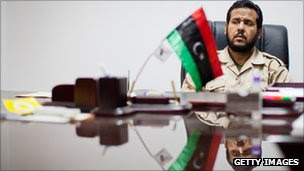
Torture claims raise questions over Libya-Britain ties


For years, Libyan and British intelligence were enemies. The legacy of Lockerbie and the supply of Semtex and weapons to the IRA ensured that. But 9/11 - as it did in so many areas - changed the calculus.

At issue was the role of the Libyan Islamic Fighting Group (LIFG) - an Islamist body which opposed Gaddafi and had support networks and members in the UK.

In the 1990s, a blind eye - at the very least - was turned to the LIFG, perhaps on the "my enemy's enemy is my friend" principle.

But after 9/11 the relationship of the LIFG to al-Qaeda meant that it began to be seen as a potential threat.

At the same time, the Gaddafi regime - which had been seeking a way of removing sanctions and improving relations - realised that it had valuable intelligence that the West might want.

That was the makings of, if not a formal deal, then some kind of arrangement. Libyan intelligence officers began to come over to the UK to talk about information sharing soon after 9/11.
WMD talks

On a parallel track, Libya in March 2003 approached MI6 to talk about its weapons of mass destruction - one of MI6's tasks, as well as intelligence collection and liaison, is to conduct clandestine diplomacy and talks on behalf of the government.

Here the motive for Gaddafi was survival.

He was watching the US and UK going to war that very month with Iraq over WMD and feared meeting the same fate. His son, Saif, met with MI6 officers in an upmarket hotel in Mayfair. Days later, MI6 officer Mark Allen and a colleague travelled to Libya to meet Gaddafi.

He told them their interlocutor would be Moussa Koussa, the head of external intelligence.

Libya thought its nuclear weapons programme was secret. But it had been supplied by the Pakistani AQ Khan, whose supply network had been penetrated by MI6 and the CIA.

As a result, they knew the Libyans were not being frank during the negotiations about what they had.

Eventually, after much difficulty and two trips to Libya by MI6/CIA teams, the Libyans owned up and a deal was done in December 2003.

Mark Allen was among those to conclude the terms at the Travellers Club in Pall Mall and his relationship with Moussa Koussa was solidified - along with that of Steve Kappes, the CIA officer assigned for the negotiations.
'Murky regimes'

With relations improved, the counter-terrorist co-operation which had predated the 2003 WMD deal picked up further pace.

Extensive information sharing is clear from the documents retrieved from Moussa Koussa's office, based on a shared view of the LIFG as a danger.

But just how close did the Libyans and British get?

British intelligence does have to deal with murky regimes, but the question of in what way and with what limits is crucial.

Was there the suspicion that Libya might be torturing people to provide the information that Britain was expecting? If there wasn't, should there have been? Did Britain, as some of the memos suggest, play a role in LIFG individuals being sent to Libya where they might be mistreated? This would be complicity in rendition - something always strenuously denied.

And were ministers aware of this and did they sign off on these aspects of the relationship?

These are questions which have swirled around British intelligence's relationship with a number of countries - notably Pakistan - for some time.

But in the Libyan case, we can now see original documents and communications which raise serious questions. And some of the very LIFG fighters Britain was worried about are now the ones who have removed Gaddafi's regime from power.

"Clearly in order to protect British citizens we have to work with governments around the world," a spokesperson for the prime minister said on Monday.

"Some of those governments do not share our standards but we need to do what we do to protect us against terrorism."

The issue of what we need to do and how far intelligence agencies need to go has been the source of deep controversy over the last decade. The Libya story may provide one of the most powerful case studies yet to fuel that debate.

Wikileaks: Zimbabwe's Robert Mugabe 'has cancer'


Zimbabwe's President Robert Mugabe has prostate cancer which has spread to other organs, according to a leaked US diplomatic cable.

The cable, published by whistle-blower site Wikileaks, cites central bank governor Gideon Gono as saying Mr Mugabe's doctors had urged him to quit.

The cable, written in 2008 by the US embassy in Harare, also says 87-year-old Mr Mugabe could die by 2013.

Mr Gono, a staunch ally of Mr Mugabe, dismissed the cable as "fiction".

The cable cites Mr Gono as saying the cancer had "metastasized and, according to doctors, will cause his death in three to five years."

In an interview with Reuters news agency last September, Mr Mugabe - who has been in power since 1980 - dismissed rumours that he was dying of cancer and had suffered a stroke.
'Mugabe will quit'

The cable, written in June 2008 by the former US ambassador to Harare, James McGee, quotes Mr Gono as saying that doctors had advised Mr Mugabe to reduce his activities.

The cable says that a year earlier, Mr Gono had said that Mr Mugabe's doctors had told him to step down immediately.

"Mugabe had told his doctor, according to Gono, that he would leave office after the [2008] election," says the cable.

In his response, Mr Gono dismissed the cable as "fiction" and said he did not have the "power to shorten or elongate people's lives", Zimbabwe's privately owned Daily News newspaper reported.

Mr Mugabe's Zanu-PF party and Prime Minister Morgan Tsvangirai's Movement for Democratic Change (MDC) party have not yet agreed on an election date, but Mr Mugabe said at the weekend that it could take place next year.

Mr Mugabe formed a power-sharing government with Mr Tsvangirai following elections marred by violence in 2008.

International Red Cross visits Syrian prison


The International Red Cross (ICRC) has been allowed to visit a Syrian prison for the first time since concerns emerged over the treatment of inmates.

The ICRC said it had visited Damascus central prison in Adra suburb on Sunday.

ICRC President Jakob Kellenberger said he also held talks with President Bashar al-Assad on Monday.

Amnesty International said last week it believed at least 88 Syrian detainees had died in the past five months.

"The Syrian authorities have granted the ICRC access to a place of detention for the first time," said Mr Kellenberger at the end of a two-day visit to Damascus.

"Initially, we will have access to persons detained by the ministry of the interior and we are hopeful that we will soon be able to visit all detainees."

During his talks with President Assad, Mr Kellenberger said he had discussed "the rules governing the use of force by security forces in the current situation and the obligation to respect the physical and psychological well-being and human dignity of detainees".
Access request

The ICRC has been asking for access to detainees for several months, says the BBC's Imogen Foulkes in Geneva where the ICRC issued its statement.

In June Mr Kellenberger visited Syria, but only now after a second visit has access been granted and so far only to one prison, our correspondent says.

Nevertheless, the ICRC says this is a step forward. Red Cross delegates will be able to assess the condition of detainees, to request improvements from the Syrian authorities and to give the families of detainees news of them.

The ICRC says it generally never makes publicly available details of what it finds in the prisons it inspects as it believes that to do so would limit future access.

It works instead directly with detaining authorities, governments and officials to try to improve the treatment of detainees and the conditions of prisoners, it told the BBC.
Detention deaths

In its report last week, Amnesty said that those who died in detention - including 10 children - had been subjected to beatings, burns, electric shocks and other abuse.

All of those who died were thought to have been arrested after taking part in anti-government protests, said the group.

Thousands have been detained since the anti-government protests started in March this year.

Access to Syria has been severely restricted for international journalists and it is rarely possible to verify accounts by witnesses and activists.

News International to sell Wapping site, publisher says


News International is to sell its Wapping site in east London, the newspaper publisher has said.

Its stable of titles - which includes the Sun, the Times and the Sunday Times - will be entirely relocated to its nearby Thomas More Square base.

The Wapping site was also where the News of the World was based until its closure amid the phone-hacking scandal.

The company said "current market conditions" led to a decision "not to proceed with remodelling" Wapping.

It said: "The decision to sell the 15-acre site follows a review of News International's London property portfolio.

"The majority of News International's Wapping-based editorial and commercial staff have now relocated into Thomas More Square, with the remainder to be relocated by the end of 2011.
'Symbol'

"Thomas More Square provides the company with excellent facilities and flexibility. As a result, and in light of current market conditions, News International has decided not to proceed with re-modelling the Wapping site."

Wapping has been the headquarters of News International's UK operations for 25 years.

News Corporation, the parent company of News International, announced it was refurbishing the site in September 2008.

It planned to create a "new campus" for its UK businesses, including News International, HarperCollins, MySpace, Dow Jones and Fox, and it was envisaged the project would be completed in 2012.

At the time, James Murdoch, the boss of News Corporation's UK arm, said: "Wapping is not only important as a physical site, but also it is a symbol of how bold individuals, working together, can advance the world of media and thereby contribute to life in Britain."

The BBC's Nick Higham said Wapping became synonymous with Rupert Murdoch's taking on the print unions in the 1980s.

"In moving out of there, they are turning their backs on a very, very significant piece of industrial relations and media history."

Our correspondent said print unions had "an absolute stranglehold" on newspapers right up until 1980s but Rupert Murdoch had the "guts, the wits, the chutzpah" to "call their bluff".

"He built a completely new print works, he sacked all 5,000 of the existing print workers, employed 400 new ones, brought in new technology - and after well over a year of pitched battles with police and pickets outside Fortress Wapping, trying to stop his lorries taking his newspapers out, he finally won and the print unions were forced to withdraw.

"And as a result of that, every other newspaper followed suit, they all moved out of Fleet street, they all bought new print works," he said.

6,000 Sertai Marathon Malam Putrajaya 2011

6,000 Sertai Marathon Malam Putrajaya 2011

KUALA LUMPUR – Seramai 6,000 peserta termasuk dari negara luar telah membuat pendaftaran menyertai Marathon Malam Putrajaya (PNM) 2011 yang akan berlangsung di Putrajaya pada 15 Oktober ini.

Pengarah Perlumbaan PNM 2011, V.Nithiaseelan berkata, meskipun pelancaran PNM 2011 baru saja diadakan pada 28 Julai lalu tetapi sambutan yang diterima daripada orang ramai setakat ini cukup menggalakkan.

“Kita telah menerima penyertaan seramai 6,000 pelari marathon termasuk dari Australia, Kenya dan Singapura dan kita hanya membuka pendaftaran untuk 10,000 peserta.

“Oleh itu kami mengesa orang ramai supaya membuat pendaftaran dengan segera sebelum kuota ini dipenuhi,” katanya melalui satu kenyataan media hari ini.

Nithiaseelan berkata, PNM 2011 ditaja oleh Bank Simpanan Nasional manakala NTV7 dan The Malays Mail merupakan rakan media.

Menurutnya, yuran pendaftaran PNM 2011 untuk acara `full marathon’ sebanyak RM75 manakala bagi `half marathon’ sebanyak RM62.

Tambahnya, yuran bagi larian sejauh 10 Kilometer pula RM55 dan RM35 bagi `Fun Run’ manakala yuran minimum Cabaran Korporat sebanyak RM2,000 bagi setiap pasukan yang terdiri daripada 10 pelari.

Jelas beliau, PNM 2011 menyediakan hadiah wang tunai terkumpul sebanyak RM85,000 untuk diberi kepada 20 pemenang teratas bagi semua acara dan tarikh tutup pendaftaran adalah pada 15 September ini.

Orang ramai yang mahu mendapatkan maklumat lanjut mengenai PNM 2011 boleh melayari laman web

Jacques Chirac trial due to open in Paris


Former French President Jacques Chirac is due to go on trial charged with illegal party funding during his time as mayor of Paris.


However, there are doubts whether the trial can go ahead as planned after a medical report found that Mr Chirac, 78, is suffering memory lapses.


Mr Chirac, who denies the charges, has asked the Paris court for his lawyers to be allowed to represent him.


He is the first French former leader to stand trial since World War II.


The BBC's Hugh Schofield in Paris says that if the trial goes ahead it will almost certainly be in Mr Chirac's absence.


Mr Chirac, who was mayor of Paris from 1977 to 1995, is accused on two counts of paying members of his Rally for the Republic (RPR) party for municipal jobs that did not exist.


If found guilty he faces up to 10 years in jail and a fine of 150,000 euros (£131,000).


The first count accuses Mr Chirac of embezzlement and breach of trust relating to 21 so-called "ghost jobs".


The second resulted from a separate investigation in the Paris suburb of Nanterre and involves an illegal conflict of interest relating to seven ghost jobs.


Despite persistent rumours of wrongdoing, Mr Chirac was immune from prosecution while he was president from 1995 to 2007.


After years of legal wrangling, he and nine other defendants finally went on trail in March.


But on the second day of the trial a lawyer representing Mr Chirac's former chief of staff at city hall, Remy Chardon, challenged the two cases being brought together.

Memory lapses


He argued that the statute of limitations had expired in the first case.


The Court of Cassation - France's highest appeals court - later ruled that the constitutional challenge was not valid.


Friends of the former president say that in recent months he has been subject to embarrassing lapses of memory.


His mind wanders although he doesn't realise it, they say.


A medical report sent to the judge - drawn up at the request of Mr Chirac's family - spelled out his condition and recommended that he be excused from attending the trial because he is not able reliably to answer questions about the past.


On Monday, Judge Dominique Pauthe is expected to respond to the medical report in his opening remarks. His options include dropping the case, postponing it or seeking further medical opinion.


Our correspondent says there are a few sceptics who say the medical arguments are being exaggerated by a Chirac family furious about the humiliation of a trial.


Mr Chirac is the first French former head of state to face criminal charges since Marshal Philippe Petain - leader of the collaborationist wartime regime - was convicted of treason after World War II.

Related Posts Plugin for WordPress, Blogger...
Twitter Delicious Facebook Digg Stumbleupon Favorites More

 
Design by Free WordPress Themes | Bloggerized by Autos Cars New Designs - Premium Blogger Themes Powered by Blogger | DSW printable coupons